
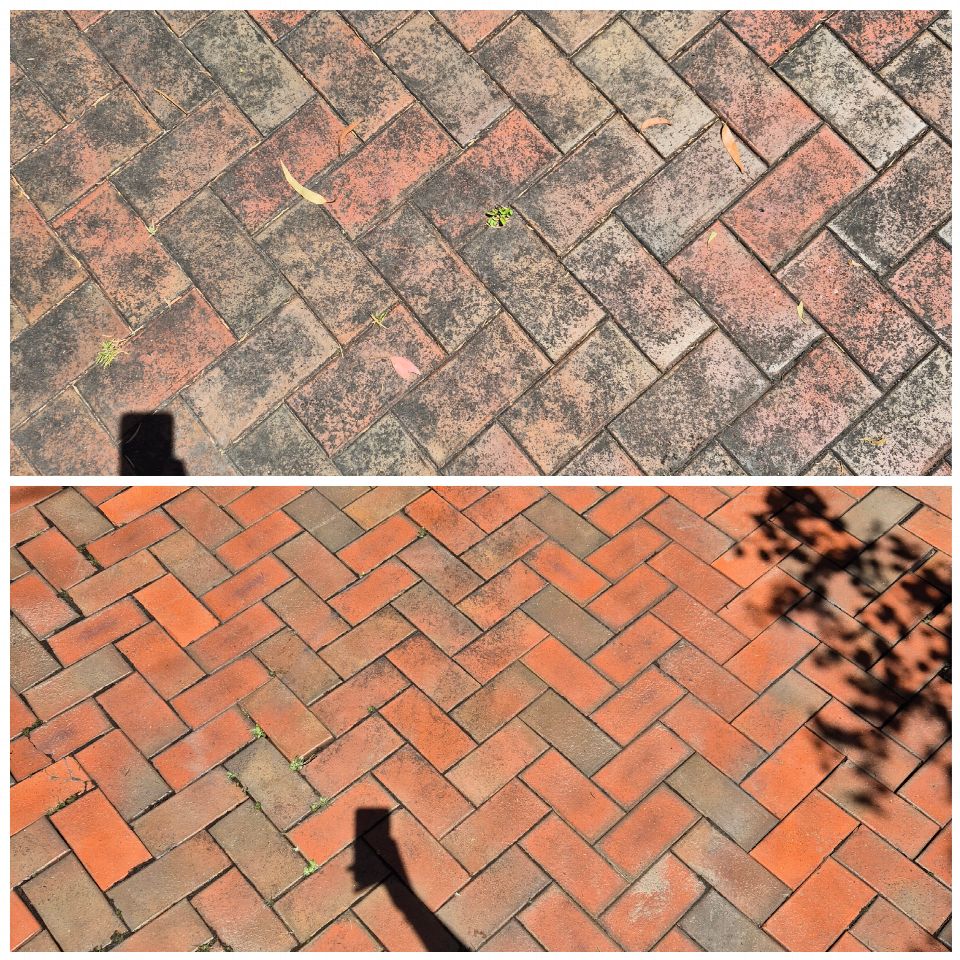
By the end of a Melbourne winter, many shaded paths, steps and courtyards have turned green. What starts as a faint tint becomes a slippery film after rain — a real hazard on steps and sloping paths, especially for children and older visitors.
Why it grows where it does
Moss and algae need three things: moisture, shade and a surface to grip. That is why they appear:
- On the south side of the house and under trees
- Where downpipes or sprinklers keep paving damp
- In the joints between pavers, where soil and water collect
- On porous surfaces like concrete, sandstone and clay pavers
Cleaning it safely
- Sweep first to remove leaves and loose growth.
- Scrub small areas with a stiff broom and water; this is often enough for light algae.
- Pressure wash larger areas with the right nozzle and distance for the surface — too close, and the water can etch concrete or wash out the joints between pavers.
- Rinse towards garden beds or lawn, not into drains, if any product has been used.
- Re-sand the joints between pavers afterwards if the sand has washed out.
If you use a moss or algae treatment, follow the label exactly, keep it away from pets and plants, and never mix products.
Our article on pressure washing mistakes covers the surfaces that are easily damaged.
Slowing it down
- Trim back plants and branches to let in more light.
- Fix leaking taps, downpipes and sprinklers that keep paving wet.
- Sweep leaves before they break down on the surface.
- Clean shaded areas once a year, ideally in late spring before the next wet season.
Our guide on how often to clean paving has a simple schedule by area.
When to call someone
Larger areas, steps and anything you would need to stand on while slippery are worth handing over. Our pressure washing is priced by area — $2.75 incl. GST per square metre, or $108.90 incl. GST for 40 m², including GST — in the instant quote calculator.
Ready for a price?
See exactly what our pressure washing includes, or go straight to the next step.
Or call 0466 699 276 · WhatsApp us