
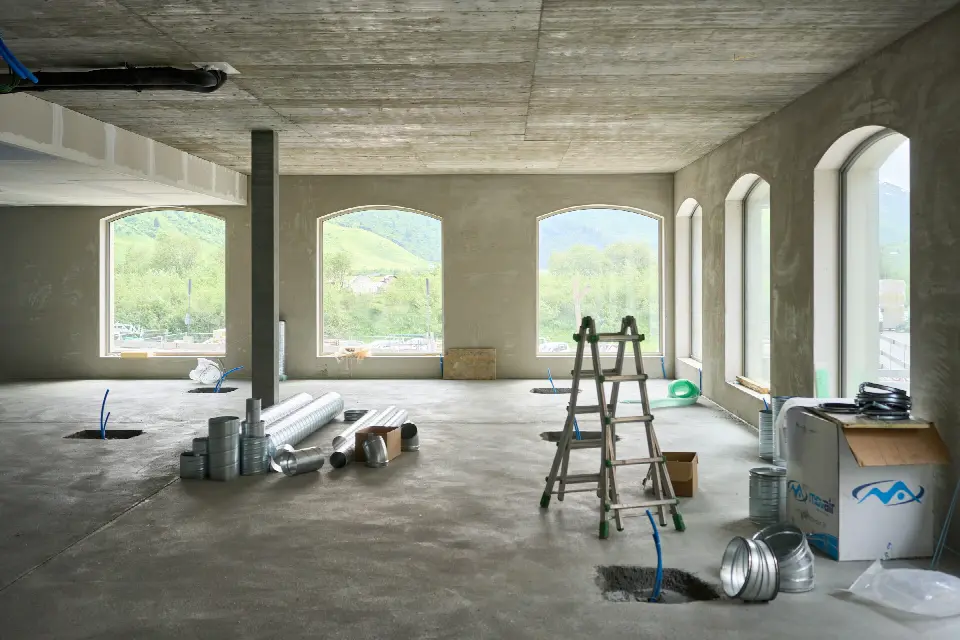
New floors are the largest and most easily damaged surface in a new home. Grit under a mop scratches timber and hybrid boards, the wrong product dulls a factory finish, and new carpet traps every bit of dust the other trades made.
This guide covers the first clean of each floor type after construction or renovation: what to do before you start, the order that avoids scratches, how adhesive and residue are handled, and how to tell dirt from damage.
Quick checklist
- Find out the floor product and the maker's cleaning instructions before the first clean
- Remove grit dry first — vacuum with a soft head; never drag debris across the surface
- Use a barely damp mop on timber and hybrid; no steam mops or soaking
- Deal with adhesive and silicone as the installer or maker advises
- Vacuum new carpet thoroughly; protect it until handover
- Record scratches, gaps and lifting edges before furniture goes in
Timber and hybrid floors
New floors are often laid before the last trades finish, so they collect plaster dust, grit, paint flecks and adhesive. Grit is the real danger: dragged under boots or a mop, it scratches the coating of timber, laminate and hybrid floors. The first clean matters more than any later one.
Before you start
- Check the floor maker's care instructions. Many hybrid and laminate floors must never be wet-mopped heavily or steam cleaned.
- Lift the protection carefully. Floor protection sheets hold a layer of dust — roll them inwards rather than dragging them.
The safe order
- Vacuum first with a soft floor head (not a beater bar) to lift loose grit. Go along the skirting with the crevice tool.
- Dry microfibre mop to collect the fine dust the vacuum left.
- Damp mop with a well-wrung microfibre pad and the cleaner the floor maker recommends — a barely damp pad, not a wet one.
- Spot-clean paint flecks or adhesive with the method in the maker's guide. Test first in a corner.
What to avoid
| Avoid | Why |
|---|---|
| Steam mops | Heat and moisture can swell joints and damage coatings on many floors |
| Wet mopping | Water in the joints can cause swelling and lifting |
| Abrasive pads and scrapers | They scratch the finish |
| Oil soaps and polishes | Can leave a slippery film or void the warranty on some floors |
| Dragging furniture | Use felt pads and lift heavy items |
Adhesive and silicone on floors
Construction adhesive and silicone smears need the method the floor maker allows — some solvents damage coatings. If in doubt, leave it for the installer.
Scratches and gaps
Scratches, chips, gaps and lifted boards are defects for the flooring installer or builder, not cleaning issues. Photograph them before cleaning.
After installation work
If the floor was just laid, see cleaning after flooring installation. If timber floors were sanded and polished, floor sanding dust explains the extra steps.
Floors are cleaned in every stage of our builders cleaning, with methods matched to the floor type. Tell us the floor product when you ask for a quote.
Straight after the flooring installers leave
Laying a new floor creates its own mess. Boards and planks are cut on site, producing fine dust; adhesive and sealant end up on surfaces nearby; offcuts, spacers and packaging get tucked under skirting and into cupboards. A careful clean afterwards protects the new floor and makes the room ready to use.
What is usually left behind
- Cutting dust from timber, laminate, hybrid or vinyl — often over the whole room, not just the cutting area
- Adhesive or sealant on the floor surface, skirting and door frames
- Spacers, offcuts and packaging
- Marks on walls and skirting where boards were fitted
The order
- Pick up debris — spacers, offcuts and packaging.
- Vacuum with a soft floor head, then the crevice tool along skirting and in corners.
- Wipe skirting, door frames and sills with a damp microfibre cloth.
- Dry-mop the floor to collect fine dust.
- Damp-mop only if the floor maker allows it, with a well-wrung pad.
Adhesive and residue
Adhesive should be cleaned with the method the flooring maker or installer specifies. Some solvents damage the coating of timber, laminate and vinyl. If a smear will not lift with a damp cloth, ask the installer what to use — or leave it for them.
Tiled floors
New tiles may also have grout haze and need a separate approach — see grout haze on new tiles.
Before furniture goes back
- Check the floor in good light for scratches and gaps — report them to the installer before using the room.
- Put felt pads on furniture legs.
- Wait for any finish or adhesive to cure as the installer advises.
For ongoing care of new floors, see cleaning new timber and hybrid floors. If timber was sanded and coated, read floor sanding dust.
Post-installation cleaning can be part of our builders and renovation cleaning. Tell us the floor type when you ask for a quote.
New carpet before handover
Carpet is usually one of the last finishes in a new home, but trades often still walk through afterwards. New carpet can end up with plaster dust in the pile, grit along the edges, paint spots and offcuts of underlay tucked under the skirting.
What new carpet usually needs
- A thorough vacuum in two directions, slowly, with a good filter — plaster dust sinks into the pile.
- Edges and corners with the crevice tool, where dust and fibres collect against the skirting.
- Offcuts and loose fibres picked up by hand. Shedding of loose fibres is normal in new carpet for a while.
- Spot cleaning of anything tracked in by the trades.
Does new carpet need steam cleaning?
Often not. A careful vacuum is usually enough for carpet that is only dusty. Steam cleaning may help when:
- Plaster dust has been walked deep into the pile
- There are marks from boots, paint or adhesive
- Trades used the rooms for weeks after the carpet went down
Check the carpet maker's care guide first; some recommend waiting before any wet cleaning.
Protect it until handover
- Keep the carpet protection film down until the last trades have finished.
- Put mats at doorways to hard floors and the garage.
- Ask trades to use shoe covers in carpeted rooms.
Damage vs dirt
Pulled loops, seams that show, stains that are in the dye and gaps at the skirting are installation issues for the carpet layer or builder. Photograph them before cleaning.
Carpet is vacuumed in the final stage of our builders cleaning, and carpet steam cleaning can be added if it is needed. Our new build handover checklist lists the other rooms to check.
More builders cleaning guides
- Construction Dust in a New Home: Where It Hides and How It Is Removed
- Paint, Cement, Grout Haze and Silicone: Removing Construction Residue Safely
- New Kitchens and Bathrooms: Cleaning Stone, Appliances, Tapware and Fittings
- Outside at Handover: Garage, Driveway, Alfresco, Brickwork and Pool Glass
- Hiring a Builders Cleaner: Questions to Ask, Timing and Who Removes What
- The Three Stages of Builders Cleaning Explained
Booking a builders clean
Every builders clean we do is a custom quote, itemised by stage, from your plans, photos or a site visit. Tell us the surfaces and finishes involved, the date the last trade leaves and your handover date, and send the details through the builders quote request.
Talk to us about your site
See exactly what our builders cleaning includes, or go straight to the next step.
Or call 0466 699 276 · WhatsApp us